Table of Contents
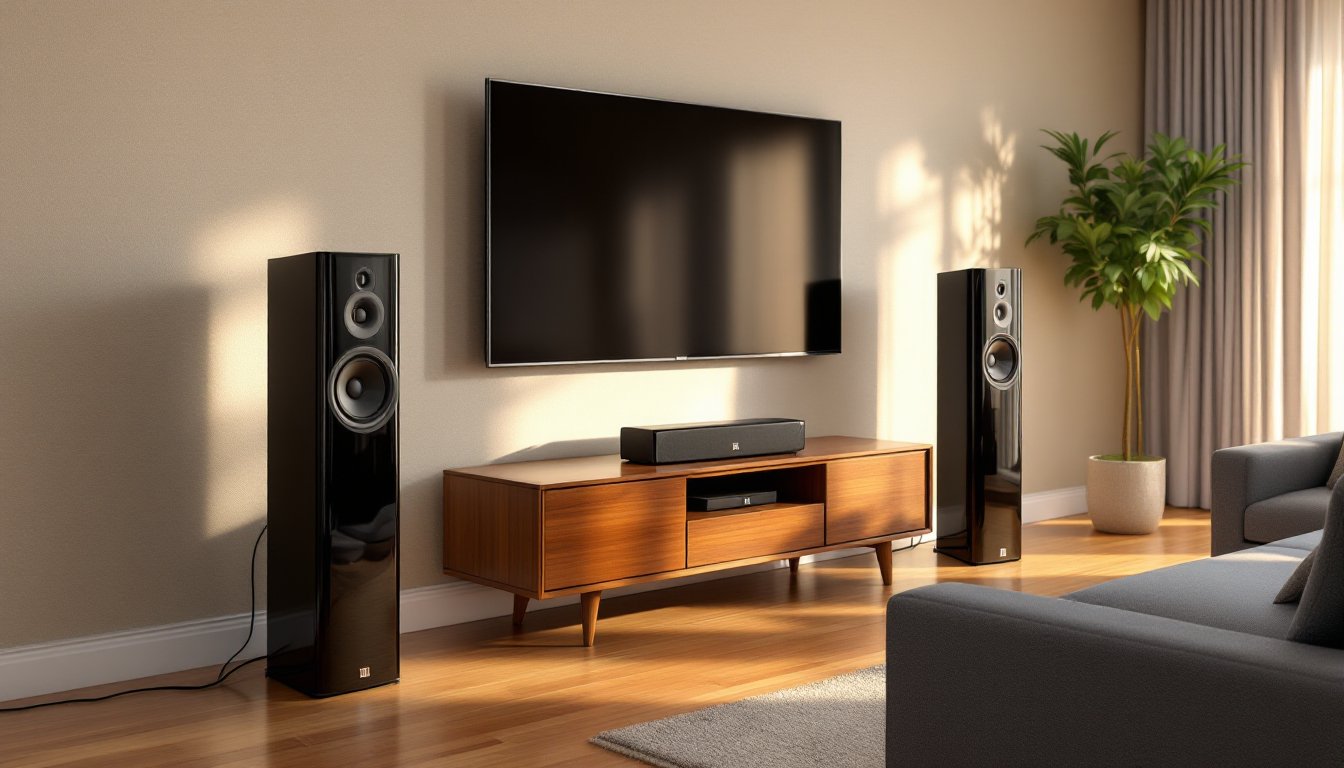
ToggleIf you’ve ever sat through a movie at home and thought “this doesn’t sound as good as the theater,” you’re not imagining things. Your TV’s built-in speakers just can’t compete with dedicated home theater audio. JBL home theater speakers bring professional-grade sound engineering into your living room without requiring a second mortgage or an acoustics degree. Whether you’re upgrading from a basic soundbar or building a surround system from scratch, JBL offers options that balance performance, reliability, and real-world usability. This guide walks through what makes JBL a solid choice, which models fit different budgets, and how to set them up for the best possible sound.
Key Takeaways
- JBL home theater speakers deliver professional-grade sound quality backed by over 75 years of audio engineering expertise, using horn-loaded tweeters and MDF cabinets that reduce distortion and resonance compared to budget alternatives.
- JBL speakers offer high sensitivity ratings (89-93 dB) that require less power from your AV receiver, making them ideal for mid-range setups while providing flexibility for 5.1, 7.1, or Dolby Atmos configurations.
- Mid-range JBL Stage series speakers provide a practical complete 5.1 home theater setup for under $2,000, allowing you to start with front speakers and center channel before adding surrounds or height speakers later.
- Proper placement, calibration, and room acoustics matter as much as speaker quality—position front speakers 6-10 feet apart at ear height, use automatic room correction on your receiver, and add acoustic panels at first reflection points to unlock full performance.
- Matched timbre across all channels, especially between your tower speakers and center channel, prevents disembodied voice effects and ensures dialogue clarity during action scenes across your entire listening area.
Why Choose JBL for Your Home Theater System?
JBL has been manufacturing professional audio equipment since 1946, and that heritage shows in their home theater lineup. The company supplies speakers for recording studios, concert venues, and commercial theaters, the same engineering principles carry over to their consumer products.
The main advantage is driver technology. JBL uses horn-loaded tweeters in many of their models, which increase efficiency and reduce distortion at higher volumes. This means dialogue stays clear during explosions, and you won’t hear the metallic harshness that cheaper tweeters produce when pushed hard.
Their cabinet construction typically uses MDF (medium-density fiberboard) with internal bracing to reduce resonance. A well-braced cabinet prevents the box itself from vibrating and coloring the sound, something you’ll notice if you compare a JBL speaker side-by-side with a budget model using thin plastic enclosures.
JBL also offers versatility in setup. Most of their tower speakers include binding posts that accept bare wire, banana plugs, or spade connectors, making them compatible with virtually any AV receiver. Many models work equally well in 5.1, 7.1, or Dolby Atmos configurations, so you can start with a basic setup and expand later without replacing your front speakers.
One practical consideration: JBL speakers often have higher sensitivity ratings (around 89-93 dB) compared to competitors. This means they require less power from your receiver to reach the same volume, which matters if you’re pairing them with a mid-range AVR that puts out 75-100 watts per channel.
Top JBL Home Theater Speaker Models for Every Budget
JBL’s lineup ranges from entry-level packages to reference-grade systems. Here’s how to match a model to your budget and room.
Premium Options for Audiophiles
The JBL HDI-3800 floor-standing speakers represent the high end of their home theater range. These use a 1-inch compression driver (the same technology in studio monitors) paired with a proprietary waveguide for controlled dispersion. The benefit: consistent sound across a wider listening area, so you don’t have to sit in the exact center of your couch to get full stereo imaging.
Each HDI-3800 includes dual 8-inch woofers with cast aluminum frames and polymer cones. Nominal dimensions are 41.5 inches tall, 10.2 inches wide, and 14.4 inches deep, plan for at least 12 inches of clearance from the back wall for proper bass response. Expect to pay around $3,500-$4,000 per pair as of 2026, though prices fluctuate with market conditions.
For the center channel in a premium setup, the JBL HDI-4500 uses the same driver technology in a horizontal cabinet. This matters more than most people realize, your center channel handles roughly 60% of a movie’s dialogue and effects, so matching the timbre to your front speakers prevents the “disembodied voice” effect you sometimes hear with mismatched systems.
If you’re investing this much in front speakers, pair them with a quality subwoofer. The JBL HDI-1200P powered subwoofer uses a 12-inch driver with a 1,000-watt Class D amplifier. It includes both line-level RCA and XLR inputs, which is useful if you’re running long cable lengths from your AVR to avoid signal degradation.
Mid-Range Solutions for Most Homeowners
For a complete home theater without breaking $2,000, the JBL Stage A190 system hits a practical sweet spot. The A190 towers use dual 8-inch woofers and a 1-inch aluminum-dome tweeter with JBL’s patented waveguide. They’re front-ported, which gives you more flexibility in placement, you can push them closer to a wall without bass blooming.
A typical 5.1 setup includes:
- Two A190 towers (front left/right): ~$600/pair
- One A135C center channel: ~$300
- Two A130 bookshelf speakers (surrounds): ~$350/pair
- One subwoofer (JBL or third-party): ~$400-$600
The Stage series also works well for those following advice from smart home integration guides that recommend scalable audio systems. You can start with a 3.1 setup (left, center, right, plus sub) and add surrounds or height channels later.
One note on the A135C center channel: it weighs about 19 pounds and measures 23 inches wide. Measure your TV stand before ordering, many homeowners assume it’ll fit under their TV, then discover their stand isn’t deep enough to accommodate the 10.2-inch depth.
How to Set Up JBL Home Theater Speakers Like a Pro
Proper placement and connection matter as much as the speakers themselves. Here’s the step-by-step process.
1. Position front speakers correctly. Tower speakers should sit 6-10 feet apart with the tweeters at ear height when seated (typically 36-42 inches off the floor). If your towers are taller and the tweeter sits higher, angle them downward slightly using furniture sliders or speaker spikes.
2. Aim the center channel. Place it directly above or below your TV, aimed at the primary seating position. If it’s above the TV, tilt it down: if below, tilt it up. A laser level helps here, the acoustic center should point at your ears, not your shins.
3. Place surrounds for immersion. For a 5.1 system, surround speakers should sit 90-110 degrees from the front center position, about 2 feet above ear level when seated. Don’t put them directly behind the couch, that’s a common mistake that creates an unnatural “hole” in the soundfield.
4. Run speaker wire properly. Use 16-gauge wire for runs under 50 feet, or 14-gauge for longer distances. Strip about 1/2 inch of insulation from each end. When connecting to binding posts, twist the bare wire clockwise before inserting, this prevents stray strands from causing shorts.
5. Configure your AV receiver. Run the automatic room correction (Audyssey, YPAO, Dirac, etc.) that came with your receiver. Place the calibration mic at ear height in your main seating position. These systems measure speaker distances, levels, and frequency response, then apply EQ to compensate for room acoustics.
After auto-calibration, double-check the crossover settings. For the JBL Stage series, set towers to “Large” if they’ll handle bass on their own, or “Small” with an 80 Hz crossover if you’re using a subwoofer. Set bookshelf speakers and center channels to “Small” with an 80-100 Hz crossover, they don’t have the woofer size to reproduce deep bass cleanly.
Safety note: Wear work gloves when handling speaker wire to avoid cuts from sharp wire ends, and use a stud finder before drilling into walls to avoid electrical lines and plumbing.
Optimizing Your Room Acoustics for JBL Speakers
Even premium speakers sound mediocre in a poorly treated room. You don’t need thousands in acoustic panels, but a few targeted improvements make a noticeable difference.
Address first reflection points. Sound waves bounce off walls before reaching your ears, creating comb filtering that muddles dialogue. To find reflection points, sit in your main seat and have someone move a mirror along the side walls. Where you see the speaker reflected, place an acoustic panel (2-inch thick fiberglass or rockwool). Two panels per side wall usually suffice.
Most rooms benefit from a panel or thick curtain on the wall behind the front speakers. Hard drywall reflects high frequencies back toward you, creating a harsh, bright sound. A single 2×4-foot panel costs $50-$100 and takes ten minutes to hang using Command strips rated for the panel’s weight.
Control bass nodes. Low frequencies build up in corners, creating boomy, indistinct bass. Bass traps, thicker versions of acoustic panels, usually 4-6 inches deep, go in room corners from floor to ceiling. If you’re on a budget, stacking dense furniture (bookcases full of books, heavy curtains) in corners provides some absorption, though it’s not as effective as purpose-built traps.
Add area rugs and upholstery. Hard floors (tile, hardwood, laminate) reflect sound like a mirror. An 8×10 area rug between your seating and speakers absorbs mid and high frequencies that would otherwise bounce off the floor. Similarly, upholstered furniture (fabric couches, padded chairs) absorbs sound better than leather or vinyl.
Many homeowners following recommendations from home product testing experts also find that adjusting furniture layout improves sound. Avoid placing your couch directly against the back wall, leave 12-18 inches of space to reduce bass buildup behind your head.
One advanced tweak: measure speaker placement using the “rule of thirds.” Position your front speakers roughly one-third of the room width from each side wall. This minimizes standing waves that create uneven bass response. It won’t work in every room, but it’s a solid starting point before fine-tuning by ear.
Conclusion
JBL home theater speakers offer a reliable path to cinema-quality sound backed by decades of professional audio engineering. Whether someone opts for the high-end HDI series or a budget-friendly Stage setup, the fundamentals remain the same: proper placement, correct calibration, and basic room treatment unlock the performance these speakers are capable of delivering. The difference between good home theater sound and great home theater sound often comes down to the details covered here, crossover settings, reflection control, and matched timbre across channels. Those willing to measure twice and listen critically will end up with a system that genuinely competes with commercial theaters.