Table of Contents
ToggleWhen you spray Ortho Home Defense along baseboards or around entry points, the liquid application is just the beginning. The real work starts after the product dries, when it transforms into a residual barrier that keeps killing insects for months. Many homeowners wonder what actually happens during that drying process and why the dried formula continues to stop pests long after application. Understanding the science behind the dried barrier helps you apply it more effectively and maintain consistent protection around your home.
Key Takeaways
- Ortho Home Defense works after it dries by leaving behind crystalline bifenthrin residue that kills insects on contact through their exoskeleton, disrupting their nervous system and causing paralysis within minutes to hours.
- Indoor applications of Ortho Home Defense remain effective for up to 12 months on non-porous surfaces, while outdoor use lasts around 3 months due to UV exposure and weather degradation.
- UV exposure, moisture, cleaning, and foot traffic are the primary factors that reduce the dried barrier’s longevity, making high-traffic entry points like thresholds ideal candidates for more frequent reapplication.
- Proper surface preparation, applying a continuous 4-inch band, and treating both interior and exterior entry points maximize the effectiveness of the dried barrier against crawling pests.
- Once fully dried within 20 to 30 minutes, Ortho Home Defense is safe for normal household activity, though you should avoid direct prolonged contact and keep pet food bowls away from treated areas.
- For comprehensive pest control, combine the dried barrier treatment with sealing cracks, eliminating water sources, and removing food sources rather than relying on the insecticide alone.
What Happens When Ortho Home Defense Dries
Ortho Home Defense contains bifenthrin, a synthetic pyrethroid insecticide suspended in a water-based carrier solution. When you spray it on a surface, the water evaporates within 20 to 30 minutes under normal conditions, leaving behind a thin layer of active ingredient bonded to the surface.
As the water evaporates, the bifenthrin crystals don’t disappear, they adhere to the substrate at a microscopic level. Think of it like paint: the liquid carrier dries away, but the active component remains as a coating. This crystalline residue is invisible to the eye but deadly to insects that cross it.
The drying process is affected by temperature, humidity, and airflow. In a well-ventilated room at 70°F, the product typically dries faster than in a damp basement. Porous surfaces like unfinished wood or concrete absorb some of the solution, which can actually extend the barrier’s effectiveness by creating a deeper reservoir of active ingredient.
Once fully dried, the surface is safe for normal household activity. Pets and children can walk on treated areas without risk, though it’s still wise to wait until the surface is completely dry to the touch before allowing heavy traffic.
How the Dried Barrier Kills Insects
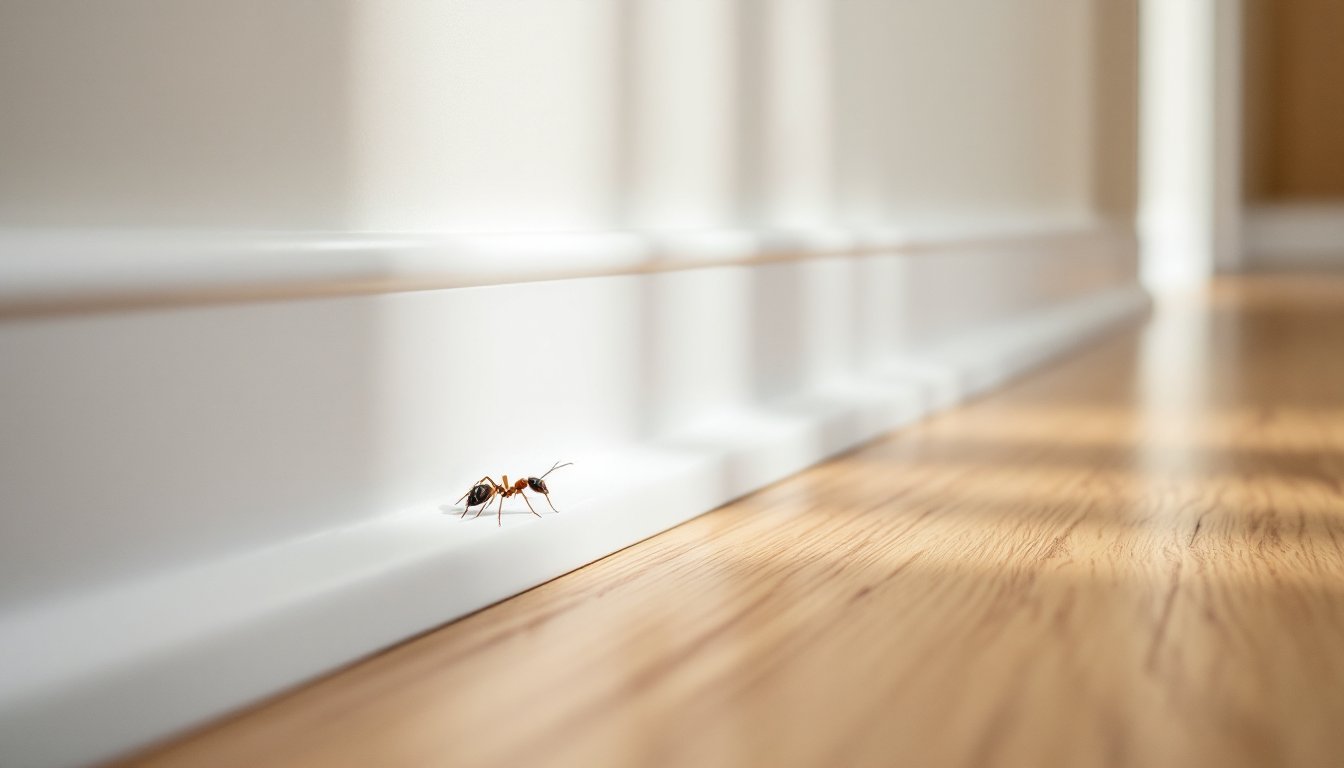
The dried bifenthrin layer works by disrupting the nervous system of insects that come into contact with it. When a spider, ant, roach, or other crawling pest walks across the treated surface, microscopic crystals of the insecticide attach to their legs and body.
Bifenthrin is a neurotoxin that targets the insect’s sodium channels, essentially the electrical system that controls muscle movement and basic functions. Once the chemical enters the insect’s body, it causes hyperexcitation of the nervous system, leading to paralysis and death. This process can take anywhere from minutes to several hours, depending on the insect species and the amount of exposure.
One reason Ortho Home Defense remains effective after drying is that insects don’t need to consume it. Simple contact is enough. This makes it particularly effective against pests that don’t take baits well, like spiders or millipedes.
Contact Action vs. Ingestion
Most insecticides work through one of two mechanisms: contact or ingestion. Ortho Home Defense primarily relies on contact action. When an insect’s exoskeleton touches the dried residue, the bifenthrin penetrates through the cuticle (the insect’s outer layer) and enters the body.
Some insects also ingest small amounts while grooming their legs and antennae, a common behavior in ants and roaches. This dual-action approach increases effectiveness, but the contact mechanism is the primary mode of action.
Ingestion-based products, like bait stations, require the pest to eat the poison and often depend on the insect carrying it back to a colony. Contact insecticides like Ortho Home Defense work faster on individual pests but won’t eliminate entire colonies unless those insects physically cross the treated barrier. For comprehensive ant control strategies, combining barrier treatments with targeted baits often yields the best results.
How Long the Dried Formula Remains Effective
Ortho Home Defense claims up to 12 months of protection when applied indoors on non-porous surfaces. Outdoors, the effective period drops to around 3 months due to environmental exposure. These timeframes assume the barrier isn’t disturbed by cleaning or weather.
The longevity comes from bifenthrin’s chemical stability. Unlike older insecticides that break down quickly under UV light or heat, synthetic pyrethroids maintain their molecular structure for extended periods when protected from direct degradation factors.
Indoor applications last longer because they’re shielded from rain, intense sunlight, and temperature extremes. A treated baseboard in a climate-controlled living room will remain effective far longer than a treated foundation wall exposed to seasonal weather.
In practice, most homeowners reapply every 3 to 6 months to maintain consistent protection, especially in high-traffic pest entry points like garage thresholds or basement window wells. If you’re seeing renewed insect activity before the claimed duration, it’s usually a sign that environmental factors have degraded the barrier or that cleaning has removed it.
Factors That Affect the Dried Barrier’s Longevity
Several conditions can shorten or extend how long the dried barrier continues to kill insects.
UV exposure is the biggest outdoor degradation factor. Direct sunlight breaks down bifenthrin’s molecular bonds, reducing effectiveness within weeks on surfaces like sunny patios or south-facing foundations. Shaded areas retain protection much longer.
Moisture and cleaning physically remove the dried residue. Mopping, scrubbing, or pressure washing treated surfaces will eliminate the barrier. Even routine damp-mopping can gradually wear away the layer. If you need to clean treated baseboards, use a dry cloth or vacuum instead of wet cleaning methods.
Surface porosity affects absorption and retention. Concrete, brick, and unsealed wood absorb more of the solution during application, creating a deeper reservoir that lasts longer. Smooth, non-porous surfaces like vinyl, tile, or painted trim hold less product but are easier to apply evenly.
Temperature extremes can accelerate chemical breakdown. Surfaces that reach above 90°F regularly, like attic spaces or metal siding, will see faster degradation than climate-controlled interiors.
Foot traffic and abrasion physically wear away the dried layer. A treated threshold that sees constant shoe traffic will lose effectiveness faster than a treated wall-floor junction that’s rarely touched.
Maintaining your home’s protective barrier means reapplying more frequently in high-risk areas: entryways, garage perimeters, and any zone with heavy cleaning schedules. For general home maintenance advice and cleaning routines that won’t compromise pest treatments, adjust your approach to avoid over-wetting treated zones.
Best Practices for Applying Ortho Home Defense for Maximum Protection
Getting the most out of the dried barrier starts with proper application technique.
Surface preparation is critical. Sweep or vacuum the area before spraying. Dust, cobwebs, and debris create a barrier between the insecticide and the surface, reducing adhesion and effectiveness. Wipe down greasy or dirty baseboards with a damp cloth and let them dry completely before treatment.
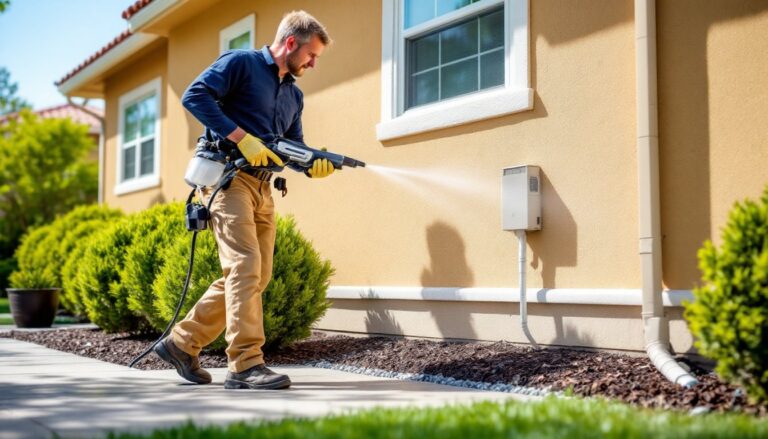
Apply in a continuous band about 4 inches wide along baseboards, door frames, window sills, and foundation cracks. Hold the spray wand 12 inches from the surface and use a steady, overlapping motion. You want visible wetness during application, but not so much that it runs or pools.
Treat both sides of entry points. Spray the interior and exterior of door thresholds, garage door seals, and foundation penetrations (where pipes or cables enter the building). Insects often approach from outside, so creating an outdoor perimeter reduces the number that make it indoors.
Don’t skimp on coverage. One gallon of Ortho Home Defense covers approximately 1,600 linear feet (a 4-inch band). Most homes require 0.5 to 1.5 gallons for a full perimeter treatment. Running out mid-application and leaving gaps defeats the purpose.
Time your application wisely. Treat when you can keep the area undisturbed for at least 30 minutes while it dries. Avoid applying right before mopping or heavy foot traffic. For outdoor applications, check the weather, rain within 24 hours will wash away the product before it fully bonds.
Reapply strategically. Mark your calendar to retreat high-activity zones every 3 months and low-traffic areas every 6 months. Consistency prevents pest re-establishment better than sporadic heavy treatments. Simple home organization systems can help you track seasonal maintenance tasks like barrier reapplication.
Safety Considerations Once the Product Has Dried
Once Ortho Home Defense dries completely, it poses minimal risk to humans and pets under normal use. The product label states that treated areas are safe for re-entry after drying, typically within 30 minutes.
The key word is normal use. Walking on treated floors, leaning against treated walls, or sitting near treated baseboards won’t cause harm. The dried residue doesn’t off-gas or transfer to skin in meaningful amounts during casual contact.
But, avoid direct prolonged contact. Don’t let infants crawl directly on freshly treated baseboards for the first few hours. Keep pet food and water bowls away from treated surfaces. If you’re sanding, scraping, or otherwise disturbing a treated surface, wear a dust mask to avoid inhaling particles.
During application, take standard precautions: Wear nitrile gloves and safety glasses. Ensure good ventilation, open windows or use fans. Keep people and pets out of the area until the product dries. If you’re treating a large area or have respiratory sensitivities, a respirator with organic vapor cartridges is a smart addition.
Store the product safely. Keep the container in its original packaging, tightly sealed, in a cool, dry location away from children and pets. Don’t transfer it to unmarked containers.
Bifenthrin is highly toxic to aquatic life and bees. Don’t apply near ponds, streams, or flowering plants where pollinators are active. If treating an outdoor deck or patio, ensure runoff won’t drain into storm sewers or waterways.
If you have specific health concerns, pregnancy, asthma, chemical sensitivities, consult the product’s Safety Data Sheet (SDS) or talk to your healthcare provider before use. For most households, following label directions and allowing proper drying time makes Ortho Home Defense a low-risk component of an integrated pest management strategy.
The dried barrier is remarkably durable and effective, but it’s not a standalone solution. Seal cracks, eliminate standing water, and remove food sources to make your home less inviting. The insecticide handles pests that breach your defenses, but good housekeeping and structural maintenance reduce how often they try.