Table of Contents
ToggleTiny homes have surged from novelty builds to legitimate housing solutions, but size definitions vary wildly. One builder’s “tiny” might be another’s “micro,” and without industry-wide standards, shoppers face confusion. Most definitions center on square footage caps, typically under 400 square feet, but trailers, foundations, zoning codes, and state regulations muddy the waters. Whether you’re downsizing, seeking financial freedom, or experimenting with minimalist living, understanding exact dimensions helps match your lifestyle to livable space without costly surprises.
Key Takeaways
- Most tiny homes are defined as 400 square feet or less, though definitions vary by jurisdiction and trailer-based THOWs often max out around 238–272 square feet depending on the trailer length.
- Tiny homes on wheels max out at 8.5 feet wide for highway towing, creating interior widths of 7–8 feet compared to foundation-built homes that can span 10–16 feet for better space utilization.
- Kitchen, bathroom, and sleeping areas in a typical 240-square-foot tiny home require efficient design: kitchens need just 30–50 square feet with compact appliances, and ground-floor bedrooms or loft sleeping options affect overall livability.
- Zoning and building codes are inconsistent across jurisdictions; IRC Appendix Q sets standards in some states, but THOWs classified as RVs face permanent residency restrictions while foundation tiny homes require traditional building permits.
- Choosing the right tiny home size depends on occupancy (single person versus family), work-from-home needs, storage for hobbies, and climate considerations, with THOWs in the 24–28-foot range offering better resale flexibility.
What Qualifies as a Tiny Home?
There’s no universal building code definition for “tiny home,” but the widely accepted threshold sits at 400 square feet or less. The International Residential Code (IRC) Appendix Q, adopted by some jurisdictions, defines tiny houses as dwellings of 400 square feet or less, excluding lofts. This appendix sets minimum room sizes, ceiling heights, and egress requirements tailored to compact structures.
Some advocates stretch the ceiling to 500–600 square feet, especially for foundation-built homes. Beyond that, you’re entering small-house territory. The distinction matters: financing, insurance, and zoning classifications often hinge on that 400-square-foot line.
Micro homes push the lower boundary, 100 to 200 square feet, often repurposed shipping containers or skoolie conversions. These require extreme space planning and usually sacrifice full kitchens or separate bathrooms.
Key qualifiers beyond square footage:
- Livability: Must include sleeping, cooking, and bathroom facilities.
- Mobility: Tiny houses on wheels (THOWs) follow RV or travel trailer standards (ANSI A119.5 or NFPA 1192).
- Permanent foundation: Subject to local residential codes and setback rules.
Standard Tiny Home Sizes and Square Footage
Most production tiny homes cluster around a few common footprints, driven by trailer bed lengths and standard lumber dimensions.
Tiny Houses on Wheels (THOWs)
- 8.5′ × 20′ trailer: ~170 square feet (main floor). Common starter size: legal width for highway towing without permits in most states.
- 8.5′ × 24′ trailer: ~204 square feet. Adds a bit of breathing room: still towable with a 3/4-ton or 1-ton pickup.
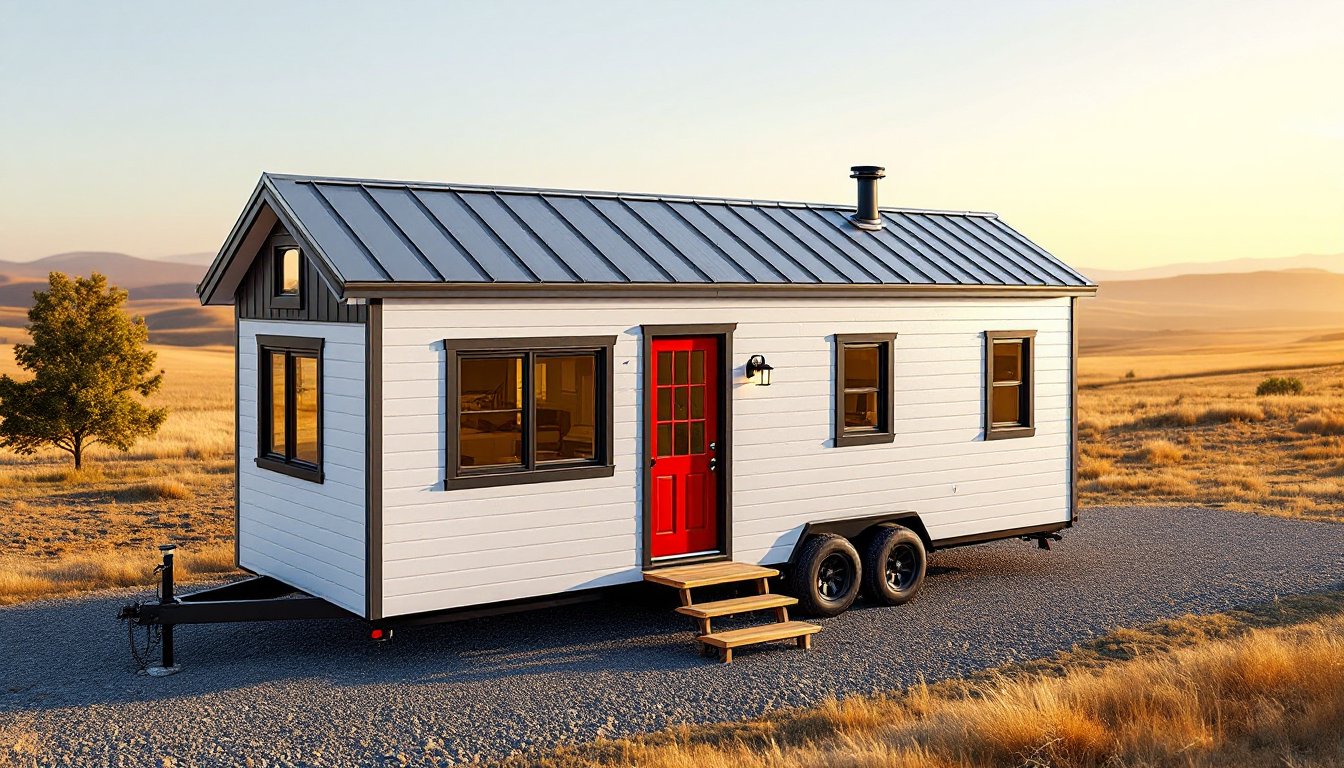
- 8.5′ × 28′ trailer: ~238 square feet. Popular sweet spot balancing space and towing practicality.
- 8.5′ × 32′ trailer: ~272 square feet. Approaching the max length for non-commercial towing: some states require special permits beyond 30 feet.
Lofts add 50–80 square feet depending on design. IRC Appendix Q allows loft ceiling heights as low as 3 feet at the access point, rising to 6 feet 8 inches over at least 50% of the area.
Foundation-Built Tiny Homes
- 10′ × 20′: 200 square feet. Minimal: best for single occupants or weekend retreats.
- 12′ × 24′: 288 square feet. Accommodates a ground-floor bedroom or larger kitchen.
- 16′ × 24′: 384 square feet. Approaches the IRC Appendix Q cap: room for standard appliances and furniture.
- 20′ × 20′: 400 square feet. Maximizes the definition: can include one full bedroom plus combo living/dining.
Foundation homes aren’t constrained by road width, so builders often go wider, 10 to 16 feet, improving interior layout and natural light.
Tiny House on Wheels vs. Foundation: Size Differences
Trailer-mounted and foundation-built tiny homes face different dimensional constraints, affecting usable space and design.
Width
THOWs max out at 8.5 feet wide (exterior) for highway towing without oversized-load permits. Subtract wall thickness (framing, sheathing, siding), typically 6 to 8 inches total, and interior width drops to around 7 feet 6 inches to 7 feet 10 inches. Furniture placement gets tight: standard sofas (32–36 inches deep) consume half the room.
Foundation homes can span 10 to 16 feet or more, easing furniture arrangement and circulation. A 12-foot width feels dramatically more spacious than 8.5 feet.
Length
Trailer beds range from 16 to 32 feet, but longer rigs require:
- Heavy-duty hitches and brake controllers.
- Careful navigation of tight turns and low clearances.
- Potential state permits (varies: some cap recreational towing at 28–30 feet).
Foundation builds aren’t limited by towing: 40-foot tiny homes exist, though they stretch the “tiny” label.
Height
THOWs face a practical ceiling of 13 feet 6 inches total height (trailer deck to roof peak) to clear highway overpasses. That leaves roughly 6 feet 6 inches to 7 feet for main-floor ceilings after accounting for trailer deck, floor joists, and roof structure.
Foundation homes can use standard 8-foot ceilings or vault to 10+ feet, reducing the cramped feel and making lofts less claustrophobic.
Structural Differences
THOWs require engineered framing to handle road vibration, glued and screwed sheathing, hurricane ties, metal strapping. Foundation homes follow conventional framing: 2×4 or 2×6 studs at 16 or 24 inches on center, less material waste, and simpler inspections.
Interior Space Breakdown: What Fits Inside a Tiny Home
Efficient layout separates livable tiny homes from cramped experiments. Here’s how space typically divides in a 240-square-foot THOW (8.5′ × 28′).
Kitchen: 30–50 Square Feet
- Countertop: 4 to 6 linear feet. Enough for a two-burner cooktop, small sink, and 12–18 inches of prep space.
- Refrigerator: Apartment-size (10–12 cubic feet) or counter-depth model.
- Storage: Base cabinets (24-inch depth) and upper cabinets (12-inch depth). Some designs incorporate pull-out pantries or overhead racks.
Skip full-size ranges: a 24-inch cooktop plus countertop convection oven saves space without sacrificing function.
Bathroom: 15–25 Square Feet
IRC Appendix Q mandates a minimum 6 feet 8 inches ceiling height over fixtures. Typical configurations:
- Composting toilet or marine cassette: Saves plumbing complexity and black-water tank space.
- Corner shower: 32″ × 32″ neo-angle units fit tight corners: 36″ × 36″ feels less claustrophobic.
- Vanity: 18 to 24 inches wide with wall-mounted sink or vessel bowl.
Ventilation is critical. Install a powered vent fan (50+ CFM) to manage humidity and prevent mold.
Sleeping: 50–80 Square Feet (Loft) or 70–100 Square Feet (Ground Floor)
Lofts accommodate a queen mattress (60″ × 80″) with minimal side clearance. Ceiling height tapers: expect to crouch near the ladder. Small space living ideas often highlight vertical storage and built-in cubbies to maximize loft utility.
Ground-floor bedrooms allow standard headroom and easier access for those with mobility concerns. A Murphy bed or convertible sofa reclaims daytime space.
Living Area: 60–80 Square Feet
A small sectional or loveseat, folding dining table, and wall-mounted TV fit comfortably. Multi-function furniture, storage ottomans, drop-leaf tables, earns its footprint.
Storage
Built-ins are non-negotiable. Under-stair drawers, toe-kick cabinets, and ceiling-height shelving capture every cubic inch. Budget 10–15% of floor area for dedicated closet or storage niches.
Legal Size Restrictions and Zoning Requirements
Tiny home legality is a patchwork. Size matters less than classification: Is it a dwelling, an RV, an accessory structure, or a manufactured home?
Zoning Classifications
- Single-family dwelling: Must meet local minimum square footage (often 600–1,000 square feet in suburban zones), defeating the tiny home concept. Some progressive municipalities waive minimums for ADUs (accessory dwelling units) or tiny-house overlay districts.
- RV/travel trailer: Treated as temporary: limited to RV parks or short-term stays (30–90 days). Permanent residency usually prohibited.
- Accessory dwelling unit (ADU): Allowed in many cities with size caps (400–800 square feet) and setback rules. Foundation required in most cases.
IRC Appendix Q
Adopted by states including California, Colorado, and Oregon (varies by county). Key provisions:
- Minimum room sizes: Habitable rooms ≥70 square feet: at least one room ≥120 square feet.
- Ceiling height: 6 feet 8 inches minimum over habitable areas: lofts allowed lower.
- Egress windows: Required in sleeping areas (5.7 square feet minimum opening).
Not all jurisdictions adopt Appendix Q. Check with your local building department before purchasing plans.
THOW Restrictions
Width: 8.5 feet max without permits. Length: State-dependent: 28–32 feet common caps for recreational towing. Weight: Often governed by real estate trends and local ordinances: some areas classify THOWs as vehicles, banning them from residential parcels.
Permits and Inspections
Foundation tiny homes require building permits, electrical/plumbing inspections, and certificate of occupancy, same as conventional houses. THOWs certified to ANSI A119.5 (RV standard) may bypass local building inspections but face RV zoning limits.
Choosing the Right Tiny Home Size for Your Lifestyle
Square footage is just the starting point. Lifestyle, occupancy, and long-term plans dictate the right fit.
Solo vs. Couple vs. Family
- One person: 150–250 square feet works if you’re tidy and own minimal gear. Loft sleeping saves floor space for living/working areas.
- Couple: 250–350 square feet. Ground-floor bedroom or larger loft improves privacy and comfort. Two people double the storage and kitchen demands.
- Family with kids: 350–400+ square feet. Bunk lofts or convertible spaces help, but tight quarters strain relationships. Consider a slightly larger “small house” (500–600 square feet) if codes allow.
Work-From-Home Considerations
Remote workers need dedicated desk space, at least 24″ × 48″, plus ergonomic seating and task lighting. A 200-square-foot THOW forces dual-use (dining table = desk), which wears thin over time. Budget an extra 30–50 square feet for a proper workstation.
Storage and Hobbies
Minimalism isn’t optional in tiny homes. If you cycle, climb, or woodwork, gear storage becomes a design driver. Outdoor sheds, roof boxes, or trailer-tongue storage boxes supplement interior space.
Climate and Mechanicals
Heating/cooling: Ductless mini-splits (9,000–12,000 BTU) handle most tiny homes. Propane or wood stoves work but consume floor space and require clearances (36 inches from combustibles).
Water heaters: Tankless propane models fit under sinks or in exterior compartments. Budget 12″ × 18″ for mounting.
Electrical panel: 100-amp service suffices for most: 50-amp if you’re off-grid or RV-park dependent.
Colder climates demand thicker insulation (R-20+ walls, R-30+ roof), stealing 2–4 inches of interior width and height.
Resale and Flexibility
THOWs in the 24–28-foot range resell fastest: they’re towable by common trucks and fit most RV sites. Foundation tiny homes face stricter zoning: buyers are scarcer. If you might relocate, wheels offer flexibility, if your build meets road-worthiness standards.
Borrowing simple living strategies from decluttering guides can help new tiny-home dwellers adjust to compact quarters and maintain organization.
Conclusion
Tiny home sizing isn’t one-size-fits-all. The 400-square-foot benchmark offers a starting point, but trailer constraints, foundation flexibility, local codes, and personal habits shape the final number. Measure your must-haves, kitchen counter space, bathroom headroom, workstation, against realistic floor plans before committing. A well-designed 240-square-foot THOW can outlive a poorly planned 400-square-foot foundation build in comfort and function.