Table of Contents
ToggleBathroom remodels are one of the most popular home improvement projects, but they’re also one of the priciest. Before you rip out that old vanity or retile the shower, you’ll want to know whether the investment will actually pay off when it’s time to sell. The short answer? Most bathroom renovations deliver solid returns, but not all remodels are created equal. A well-planned midrange update can recoup a significant chunk of your costs, while an overly lavish overhaul might price your home out of the neighborhood. Here’s what homeowners need to know about bathroom remodel ROI in 2026, including which upgrades deliver the biggest bang for your buck.
Key Takeaways
- Bathroom remodels typically return 60% to 70% of their cost at resale, with midrange updates (costing $18,000–$25,000) delivering returns closer to 67%–71%, making them the strongest performers for most homeowners.
- Upscale bathroom remodels often return only 56%–63% due to over-improving for the neighborhood, so matching your renovation scope to local market standards is critical to maximizing ROI.
- High-impact upgrades like replacing vanities with quality cabinetry, installing tile shower surrounds, upgrading to water-efficient fixtures, and improving lighting typically return 75%–85% of their cost.
- Bathroom remodels make the most financial sense when you’re selling within 1–3 years, addressing functional obsolescence, staying in your home 5+ years, or adding a second bathroom in a single-bath market.
- Always obtain proper permits for structural, plumbing, and electrical work to avoid costly issues at resale—skipping permits can result in forced code compliance or price reductions during closing.
- Local real estate market conditions, neighborhood comps, and the number of existing bathrooms are the primary factors that determine whether your bathroom remodel delivers strong returns or disappoints.
Average ROI for Bathroom Remodels
According to the latest national data, bathroom remodels typically return 60% to 70% of their cost at resale. That means a $20,000 renovation could add $12,000 to $14,000 to your home’s value. The exact percentage depends on the scope of work, local market conditions, and how your upgraded bathroom compares to neighboring homes.
Two broad categories dominate the remodeling landscape: midrange updates and upscale overhauls. Each comes with different price tags and expected returns.
Midrange Bathroom Remodel Returns
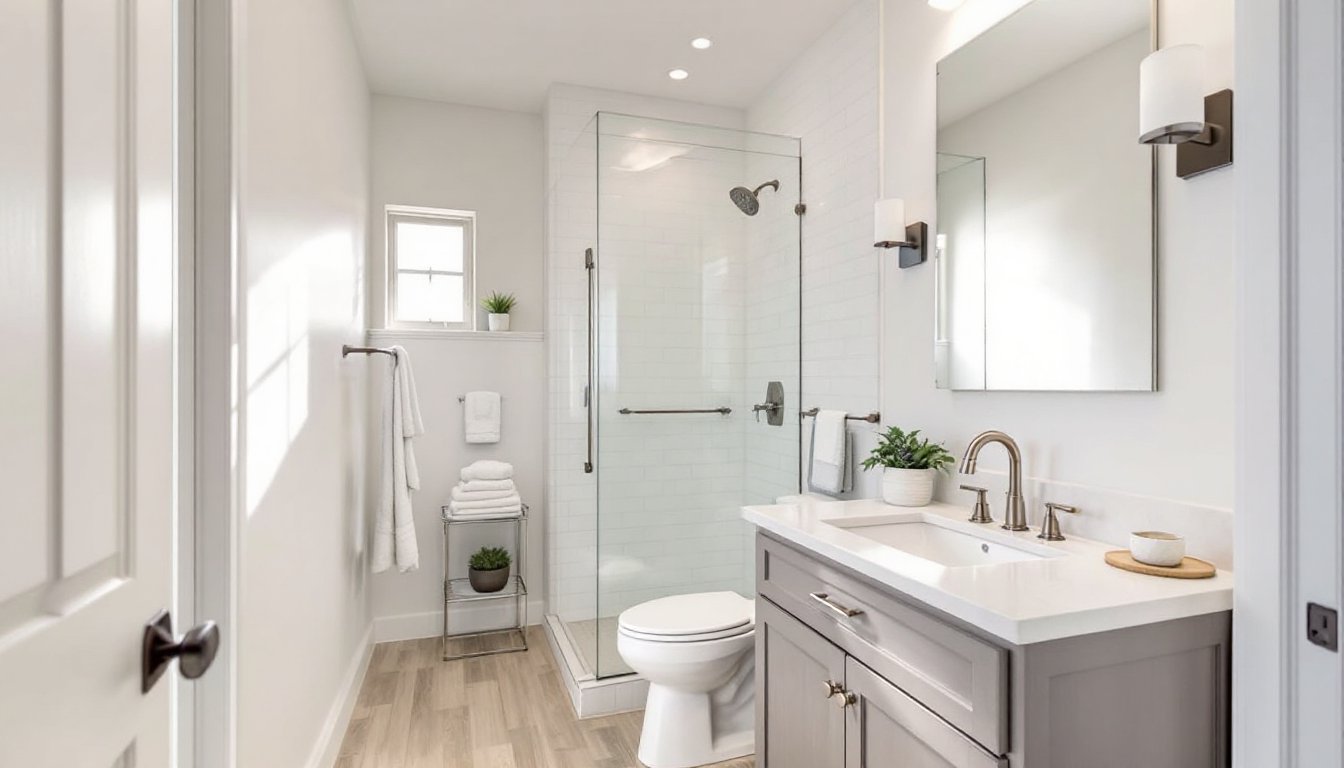
A midrange bathroom remodel typically costs between $18,000 and $25,000 and includes:
- Replacing the tub/shower surround with ceramic or porcelain tile (not a full rip-out)
- Installing a new vanity with a solid-surface countertop (36″ to 48″ wide)
- Swapping out the toilet, faucet, and light fixtures
- Adding a new framed mirror and surface-mounted medicine cabinet
- Repainting walls and installing vinyl or sheet flooring
Most contractors estimate you’ll recoup around 67% to 71% of this investment. In some hot markets, particularly in the Pacific Northwest, Mid-Atlantic, and parts of the Midwest, returns can push closer to 75%. The key is keeping finishes consistent with the neighborhood. A midrange remodel in a starter-home subdivision will perform better than one in a luxury development where buyers expect marble and custom cabinetry.
Upscale Bathroom Remodel Returns
An upscale bathroom remodel runs $60,000 to $80,000+ and involves:
- Expanding the footprint (moving walls, relocating plumbing stacks)
- Installing a freestanding soaking tub or high-end jetted model
- Custom frameless glass shower enclosure with body sprays and rain head
- Stone slab countertops (quartz, granite, or marble) on custom cabinetry
- Radiant floor heating, high-end tile work, and designer fixtures
- Upgraded electrical circuits for heated towel racks, multiple vanity outlets, and dimmable LED lighting
ROI on upscale remodels averages 56% to 63%, according to data from ImproveNet and similar remodeling cost databases. The reason for the lower percentage? You’re often over-improving for the neighborhood. A $75,000 master bath might be standard in a $1.2 million home, but it won’t move the needle in a $400,000 ranch. Buyers in mid-tier markets won’t pay a premium for luxury finishes they don’t expect.
Factors That Affect Your Bathroom Remodel ROI
Not every bathroom renovation delivers the same return. Several variables determine whether you’ll recoup 70% or just 50% of your costs.
Local real estate market: In hot seller’s markets with low inventory, buyers pay more for move-in-ready homes. Bathrooms that don’t require immediate work command a premium. In slower markets, you might not see the same bump.
Neighborhood comps: If every other home on your block has builder-grade bathrooms, a high-end remodel won’t pay off proportionally. Conversely, if you’re the only house with a 1980s almond toilet and laminate counters, an update will close the gap and help you compete.
Number of bathrooms: Homes with only one full bath see better ROI from adding a second bathroom (even a modest 5′ x 8′ layout) than from over-renovating the existing one. A second bath is a functional upgrade: a spa-like primary suite is a lifestyle preference.
DIY vs. contractor labor: Doing your own tile work, vanity installation, and painting can cut costs by 40% to 50%, boosting your ROI. But structural changes, moving plumbing stacks, rerouting drains, adding circuits, should be left to licensed pros. A botched DIY drain job or unpermitted electrical work will cost you more at inspection time than you saved upfront.
Permit compliance: Major remodels that involve moving walls, plumbing, or electrical require permits in most jurisdictions. Skipping permits to save a few hundred bucks can haunt you at resale. Buyers’ lenders and home inspectors flag unpermitted work, and you may be forced to bring everything up to code (or lower your asking price) before closing.
High-Impact Upgrades That Maximize Home Value
Some bathroom improvements deliver outsized returns. Focus your budget on these proven winners:
New vanity and countertop: Swapping a worn builder-grade vanity for a solid-wood or plywood cabinet with soft-close drawers and a quartz or granite counter is one of the highest-ROI moves. Budget $800 to $2,500 for a quality 48″ vanity with countertop. Avoid particle-board boxes, they swell and sag in humid bathrooms.
Tile shower surround: Replacing a fiberglass insert with ceramic or porcelain tile (12″ x 24″ planks or classic subway tile) instantly modernizes the space. Install a waterproof membrane like RedGard or Kerdi behind the tile to prevent mold and structural damage. DIYers with tile experience can handle this: first-timers should hire out to avoid leaks.
Low-flow, high-efficiency fixtures: WaterSense-labeled toilets (1.28 gallons per flush), low-flow showerheads (2.0 GPM or less), and sensor faucets appeal to eco-conscious buyers and can reduce utility bills. Many municipalities offer rebates for water-saving upgrades.
Improved lighting and ventilation: Replace a single overhead fixture with recessed LED cans, vanity sconces, and a properly sized exhaust fan (measured in CFM, cubic feet per minute). A 50 CFM fan is standard for a 5′ x 8′ bath: larger bathrooms need 80+ CFM. Good ventilation prevents mold, extends paint life, and protects cabinetry.
Neutral, timeless finishes: Stick with white, gray, or soft beige tile and avoid trendy colors or patterns that date quickly. Buyers want to envision their own style, not inherit yours. Save the bold choices for paint (easily changed) rather than tile or fixtures.
Research from HomeAdvisor indicates that these targeted upgrades often return 75% to 85% of their cost, especially when combined in a cohesive midrange remodel.
When a Bathroom Remodel Makes the Most Financial Sense
Timing matters. A bathroom remodel isn’t always the smartest financial move, even if the ROI looks solid on paper.
You’re selling within 1 to 3 years: Fresh bathrooms help homes sell faster and at higher prices. If you’re prepping for a sale, a midrange update pays off by making your listing competitive and reducing buyer objections.
Your bathroom is functionally obsolete: Cracked tile, leaking fixtures, water damage, or mold are red flags to buyers. Addressing these issues isn’t just about ROI, it’s about salability. Homes with obvious deferred maintenance sit longer and attract lowball offers.
You’re staying put for 5+ years: If resale isn’t imminent, remodel for your own enjoyment. You’ll get years of use out of the upgrade, and you can amortize the cost over time. Just keep an eye on neighborhood standards so you don’t over-improve.
You’re adding a second bathroom: In markets where most homes have two or more full baths, adding one to a single-bath house can deliver 100%+ ROI. This is especially true in older neighborhoods with charming but functionally limited floor plans. Carving a 5′ x 8′ bath out of a closet or unused hallway space is often worth the structural hassle.
You’re not planning to remodel for resale alone: If you’re only upgrading to boost home value, run the numbers carefully. Regional market data from bathroom upgrade studies shows that ROI varies widely by ZIP code. In some slow-growth areas, you’d do better investing in curb appeal or a kitchen refresh.
Conclusion
A bathroom remodel can add meaningful value to your home, but only if you match the scope and budget to your market and timeline. Midrange updates with timeless finishes and quality materials tend to deliver the strongest returns, while ultra-high-end renovations rarely recoup their full cost unless you’re in a luxury bracket. Focus on fixing functional problems, upgrading worn finishes, and improving lighting and ventilation. And if you’re on the fence, remember: the best ROI comes from remodels that make your home competitive without pushing it past neighborhood norms.