Table of Contents
ToggleOrtho Home Defense is one of the most popular insecticides on hardware store shelves, but homeowners applying it in their kitchens, basements, and entry points often wonder what they’re actually spraying around their families. The question isn’t whether it kills bugs, it does, but whether it poses a meaningful risk to the people and pets living in the treated space. Understanding the active ingredients, exposure pathways, and proper application techniques helps homeowners make informed decisions about pest control without unnecessary alarm or reckless use.
Key Takeaways
- Ortho Home Defense toxicity to humans is significantly lower than to insects because bifenthrin disrupts insect nerve systems more effectively than mammalian biology, but proper application is critical to minimize any exposure risk.
- Short-term exposure risks from Ortho Home Defense include skin irritation, throat irritation, and nausea primarily from direct contact or inhalation, all of which resolve quickly with proper ventilation and washing.
- EPA risk assessments show that bifenthrin used at labeled rates does not exceed safety thresholds for cancer or reproductive harm, though long-term studies on cumulative exposures continue to evolve.
- Proper application requires perimeter-only treatment, chemical-resistant PPE, adequate ventilation, allowing 30 minutes to 2 hours drying time before re-entry, and keeping all people and pets away during application.
- Children and cats face higher exposure risk due to floor-level activity, hand-to-mouth behavior, and cats’ inability to metabolize pyrethroids effectively, requiring extended precautions and vigilance for toxicity symptoms.
- Integrated Pest Management alternatives like caulking entry points, removing moisture sources, diatomaceous earth, and professional pest control services can reduce or eliminate the need for chemical insecticides like Ortho Home Defense.
What’s Actually in Ortho Home Defense?
The current Ortho Home Defense formulation relies primarily on bifenthrin as its active ingredient, a synthetic pyrethroid that targets insect nervous systems. Pyrethroids mimic natural pyrethrins derived from chrysanthemum flowers but are engineered for longer residual effectiveness, often up to 12 months indoors according to the product label.
Bifenthrin concentration in the ready-to-use spray typically sits around 0.05%, with the remaining 99.95% composed of inert ingredients including water, surfactants, and stabilizers. That low percentage doesn’t automatically mean “safe”, concentration matters, but so does route of exposure and duration.
The EPA classifies bifenthrin as a restricted-use pesticide for agricultural applications due to aquatic toxicity, but the home defense formulation falls under general use because of its diluted strength. This distinction matters: commercial applicators face stricter handling rules than homeowners buying the retail version.
Older formulations of Ortho Home Defense used different actives like lambda-cyhalothrin or esfenvalerate, so checking the label of your specific bottle is essential. Product reformulations happen quietly, and guidance for one version doesn’t always transfer to another. The Material Safety Data Sheet (MSDS), now called the Safety Data Sheet (SDS), lists exact ingredients and hazard classifications, available through the manufacturer’s website or by calling their support line.
Understanding the Toxicity Levels for Humans
Bifenthrin’s toxicity to humans is significantly lower than its effect on insects, but “lower” doesn’t mean “zero.” The compound disrupts sodium channels in nerve cells, a mechanism that works in bugs and, to a much lesser extent, in mammals. Our larger body size, different metabolism, and enzymatic breakdown processes provide substantial protection, but exposure routes and quantities still matter.
Short-Term Exposure Risks
Direct contact with wet spray causes the most common acute effects: skin irritation, tingling sensations (paresthesia), redness, and mild dermatitis. These symptoms typically resolve within hours after washing the affected area with soap and water. Inhaling aerosol mist can trigger throat irritation, coughing, or nasal discomfort, especially in poorly ventilated spaces.
Accidental ingestion, rare but possible if spray drifts onto food surfaces or children touch treated baseboards then put hands in mouths, can cause nausea, vomiting, dizziness, and headache. The EPA rates bifenthrin as Toxicity Category II for oral exposure (moderately toxic) and Category III for dermal and inhalation (slightly toxic). For context, Category I is highly toxic, Category IV is practically non-toxic.
Most reported incidents involve improper application: spraying beyond the labeled perimeter treatment, over-applying to get “extra protection,” or failing to keep people and pets out during the drying period. The label specifies allowing treated surfaces to dry completely, usually 30 minutes to 2 hours depending on humidity and airflow, before re-entry.
Long-Term Safety Considerations
Chronic low-level exposure raises different questions than one-time contact. The EPA’s Office of Pesticide Programs conducted risk assessments concluding that residential uses of bifenthrin at labeled rates don’t exceed their safety thresholds for cancer or reproductive harm. That said, cleaning product safety testing continues to evolve as researchers study cumulative pesticide exposures from multiple sources.
Bifenthrin is classified as a possible human carcinogen (Group C) based on animal studies showing tumors at very high doses, far exceeding typical residential exposure. No direct evidence links home-use pyrethroid exposure to cancer in humans, but absence of evidence isn’t evidence of absence, particularly for long-term, repeated applications over decades.
Endocrine disruption is another area of ongoing research. Some studies suggest synthetic pyrethroids may interfere with hormone signaling at high concentrations, though real-world exposure levels from occasional pest control fall well below experimental thresholds. Pregnant women and young children metabolize certain chemicals differently, which is why extra caution makes sense for these groups even when general population risk remains low.
The key principle: following label directions minimizes risk to levels regulatory agencies consider acceptable. Acceptable risk isn’t the same as zero risk, and homeowners should weigh their comfort level against the severity of their pest problem.
Safe Application Guidelines for Your Home
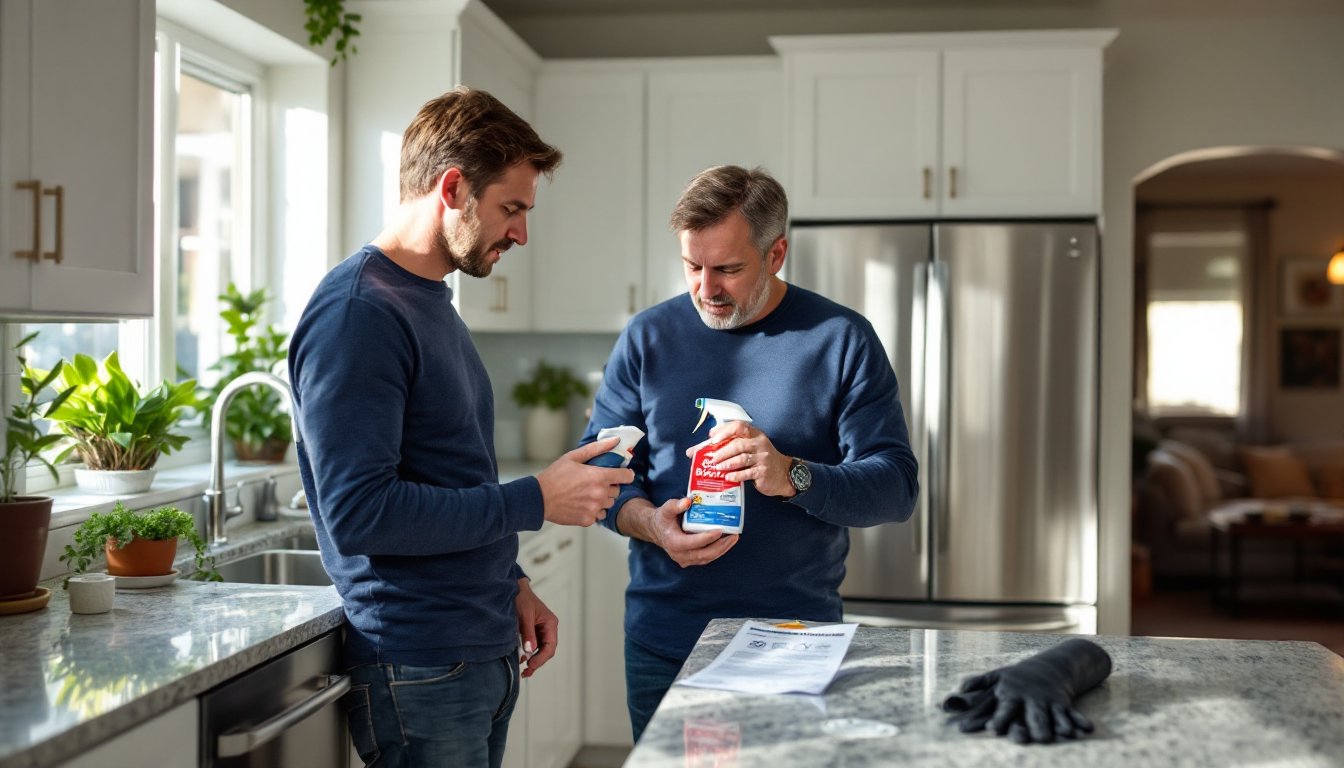
Proper application technique dramatically reduces human exposure while maintaining pest control effectiveness. Start by reading the entire label, not skimming, actually reading. It’s a legal document that defines how the product can be used, and deviating from it voids any safety assurances.
Before spraying:
- Clear the treatment area of people, pets, toys, and food items.
- Wear chemical-resistant gloves (nitrile or neoprene), long sleeves, long pants, and safety glasses. Bifenthrin absorbs through skin, so PPE isn’t optional.
- Ensure adequate ventilation. Open windows if treating interior perimeters, and use a fan to maintain airflow away from occupied rooms.
- Remove or cover fish tanks, pyrethroids are extremely toxic to aquatic life.
- Cover kitchen counters and dining surfaces if spraying nearby baseboards.
During application:
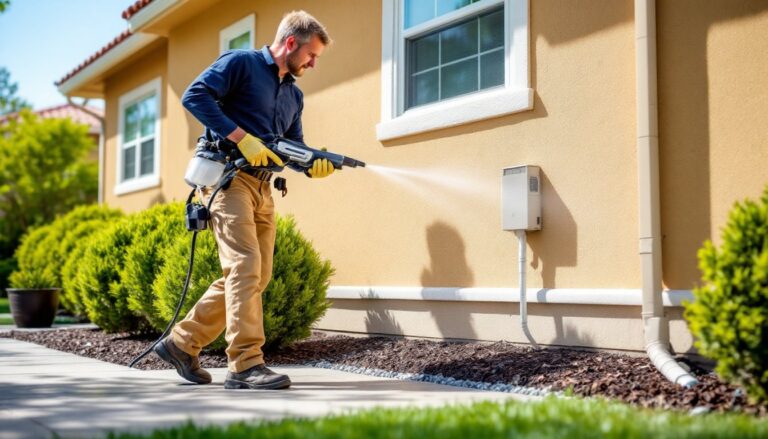
- Apply only as a perimeter treatment, a 4-inch band along baseboards, door frames, window sills, and foundation cracks. Don’t spray entire floors or walls.
- Use the product’s spray wand at the labeled distance (typically 12 inches from the surface) to control drift and prevent over-application.
- Avoid spraying on porous surfaces that won’t dry quickly (upholstery, bedding, rugs). Stick to non-porous materials like tile, sealed wood, and painted drywall.
- Don’t treat areas where children or pets frequently crawl or play. Pest control best practices emphasize targeted application over broadcast spraying.
After application:
- Keep the area off-limits until surfaces are completely dry to the touch. The label’s re-entry interval is the minimum, not a suggestion.
- Wash your hands, arms, and face thoroughly after spraying, even if wearing gloves.
- Store the spray bottle in its original container in a locked cabinet or high shelf, out of reach of children.
- Don’t apply more frequently than the label allows (usually no more than once every 7 days). More isn’t better and increases unnecessary exposure.
If treating outdoor perimeters, check the weather forecast. Rain within 24 hours washes away the product before it bonds to surfaces, and runoff can carry bifenthrin into storm drains, a violation in many jurisdictions due to aquatic toxicity concerns.
Special Precautions for Children and Pets
Children and pets face higher exposure risk for straightforward reasons: they spend more time on floors, put hands and paws in their mouths, and have smaller body weights that magnify dose-per-kilogram calculations. Pyrethroids are also more toxic to cats than to dogs or humans because cats lack certain liver enzymes that metabolize the compounds.
For households with young children:
- Treat only when kids are out of the house for at least 4 hours, extending the label’s minimum drying time.
- Focus on areas they don’t access frequently, behind appliances, inside cabinets, high baseboards in rooms they rarely enter.
- Wipe down any treated surfaces within their reach (lower baseboards in play areas) with a damp cloth after the product dries if you’re concerned about hand-to-mouth transfer.
- Never spray in nurseries, on crib rails, or near changing tables. Barrier methods (caulking entry points, door sweeps) work better in those spaces.
For pet owners:
- Keep cats out of treated areas for 24 hours minimum. Their grooming behavior means anything on their paws ends up ingested.
- Watch for signs of pyrethroid toxicity in pets: excessive drooling, tremors, twitching, vomiting, or difficulty walking. Cats show symptoms faster than dogs. If you notice these signs, call your vet immediately and mention bifenthrin exposure.
- Don’t apply near pet food or water bowls, litter boxes, or bedding.
- If treating a yard perimeter, keep pets off treated grass until it’s dry, and consider pet-safe gardening alternatives for outdoor pest management.
Aquarium owners need extra vigilance. Even trace amounts of bifenthrin kill fish and aquatic invertebrates. Cover tanks completely during application, turn off pumps to prevent aerosol intake, and consider moving tanks to untreated rooms if possible.
Safer Alternatives to Chemical Pest Control
Chemical insecticides are one tool, not the only tool. Integrated Pest Management (IPM) prioritizes non-chemical methods first, using pesticides only when other tactics fail or when infestations exceed acceptable thresholds.
Physical barriers:
- Seal cracks and gaps in foundations, around pipe penetrations, and at door thresholds with caulk or expanding foam. Most insects enter through openings you can block.
- Install door sweeps on exterior doors and weatherstripping around windows.
- Repair torn window screens, a $5 fix that eliminates entry points for flying insects.
Environmental modifications:
- Eliminate standing water sources that attract mosquitoes and provide breeding sites.
- Store firewood at least 20 feet from structures and keep mulch layers under 3 inches to reduce harborage for ants and termites.
- Fix leaky pipes and improve ventilation in damp basements or crawl spaces. Many pests seek moisture more than food.
Low-toxicity options:
- Diatomaceous earth (food-grade) damages insect exoskeletons mechanically rather than chemically. Apply it in wall voids, behind appliances, and in attics where people and pets don’t contact it. It’s a desiccant, not a poison.
- Boric acid powder works similarly for roaches and ants with very low mammalian toxicity, though it still requires careful placement away from children.
- Sticky traps and glue boards monitor and reduce pest populations without chemicals. They won’t eliminate infestations but provide early warning.
Botanical and biological controls:
- Essential oil sprays (peppermint, cedarwood, rosemary) repel some insects but require frequent reapplication and don’t match synthetic residual effectiveness. They’re better for prevention than active infestations.
- Beneficial nematodes control soil-dwelling larvae and grubs in lawns without harming people, pets, or beneficial insects.
When to call professionals:
Termites, bed bugs, carpenter ants in structural members, and any infestation that persists even though multiple treatments require licensed pest control. Professionals have access to more effective formulations, application equipment, and the training to identify root causes rather than just spraying symptoms. The cost, typically $150-$400 for an initial treatment depending on region and pest type, often beats repeated DIY failures.