Table of Contents
ToggleChoosing the right seating can make or break a home theater setup. Leather home theater seats offer a combination of durability, style, and comfort that fabric options struggle to match, especially when dealing with spills, heavy use, and the need for easy maintenance. Whether upgrading an existing media room or building from scratch, understanding the differences between leather types, features, and configurations helps homeowners make informed decisions that fit both their space and budget. This guide walks through everything needed to select, purchase, and care for leather theater seating that will last for years.
Key Takeaways
- Leather home theater seats offer superior durability, stain resistance, and easy maintenance compared to fabric alternatives, making them ideal for families and frequent entertainers.
- Top-grain and full-grain leather significantly outperform bonded leather, which typically cracks and peels within 2–5 years despite lower initial costs.
- Quality leather theater seating should feature hardwood frames, high-density foam padding (2.0+ lbs per cubic foot), and power recline with backup battery systems for optimal long-term performance.
- Proper spacing and configuration—including 38–40 inches of seat pitch and 12–18 inches of riser elevation per row—ensures comfort and clear sightlines in your home theater.
- Regular maintenance every 2–3 weeks with distilled water and conditioning every 6–12 months keeps leather supple, prevents cracking, and extends the lifespan of your seating to 20+ years.
Why Choose Leather for Your Home Theater Seating
Leather stands up to the unique demands of a home theater better than most upholstery options. Unlike fabric, it doesn’t absorb spills, popcorn butter, soda, and wine wipe clean with a damp cloth instead of leaving permanent stains. This makes it particularly practical for families or anyone who entertains regularly.
Durability is another major advantage. Quality leather develops a patina over time rather than showing wear, and it resists tearing and pilling that fabric sofas experience after a few years of use. In a media room where seats get constant use, that longevity matters.
Leather also stays cooler in warm rooms and doesn’t trap odors the way fabric does. Home theaters often have limited ventilation, so materials that don’t hold onto smells from food, pets, or body heat keep the space more pleasant. The tactile experience matters too, leather feels substantial and luxurious in a way that elevates the entire viewing experience.
From a design perspective, leather works across a wide range of aesthetics. It suits everything from classic, wood-paneled theaters to modern minimalist setups. The material’s natural variation in grain and color adds visual interest without competing with screens or acoustic treatments.
Types of Leather Used in Home Theater Seats
Not all leather is created equal, and the type used in theater seating directly affects both price and performance. Understanding the differences helps match the right material to a project’s budget and expectations.
Full-grain leather represents the highest quality. It uses the entire hide with minimal processing, retaining the natural grain and all the fibers that make leather strong. It’s the most expensive option but also the most durable and develops the richest patina. Full-grain seats can last 20+ years with proper care.
Top-grain leather is slightly more processed, the very top layer gets sanded to remove imperfections, then a finish is applied. It’s more uniform in appearance than full-grain and still very durable, making it a popular middle-ground choice. Most mid-to-high-end theater seats use top-grain leather. The upholstery selection for media rooms often includes leather as a practical and soft fabric option.
Corrected-grain leather undergoes more aggressive sanding and embossing to create an artificial grain pattern. It hides blemishes well and costs less, but it’s also less breathable and won’t age as gracefully as higher grades.
Top-Grain vs. Bonded Leather
This comparison matters because bonded leather appears frequently in budget theater seating, and it’s not actually leather in the traditional sense.
Top-grain leather is a genuine hide product. The outer layer gets light sanding for consistency, but the underlying structure remains intact. It breathes, flexes naturally, and repairs minor scratches through conditioning. Expect to pay $800–$2,000+ per seat for quality top-grain seating.
Bonded leather is made from leather scraps and fibers mixed with polyurethane binder, then applied to a fabric backing. It looks like leather initially but typically starts cracking and peeling within 2–5 years, especially in high-contact areas like armrests and seat cushions. It’s the cheapest option, often $300–$600 per seat, but rarely worth the savings for a permanent installation.
For a home theater that’ll see regular use, bonded leather creates a false economy. The seats will need replacing well before top-grain or full-grain options show significant wear.
Key Features to Look for When Buying Leather Theater Seats
Beyond the leather itself, several features separate functional seating from theater seats worth the investment.
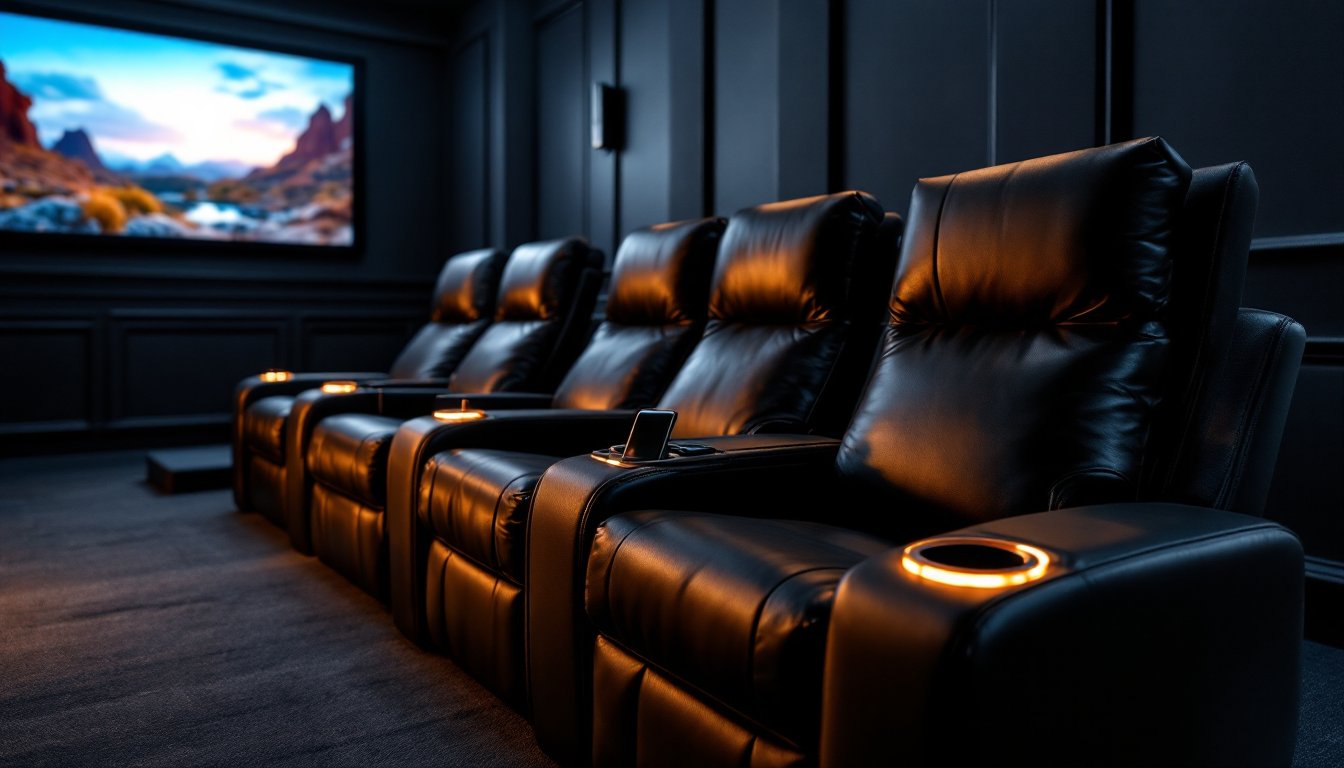
Power recline has become standard in quality theater seating. Manual recline works, but power mechanisms allow precise positioning and often include memory settings. Look for models with backup battery systems, nothing’s worse than being stuck in recline position during a power outage. USB charging ports and cup holders with LED lighting are common add-ons that genuinely improve usability.
Frame construction matters as much as the upholstery. Hardwood frames (birch, oak) outlast engineered wood or metal. Check weight capacity ratings, quality seats handle 300–350 lbs per position. Cheaper frames use particleboard or thin-gauge steel that can fail within a few years.
Seat dimensions and pitch need to match both the users and the room. Standard theater seat width runs 22–24 inches, but larger folks need 26–28 inches for comfort. Seat pitch (the measurement from one seat back to the next) should be at least 38–40 inches for adequate legroom. In tiered installations, 12–18 inches of elevation per row provides clear sightlines without excessive platform building.
Padding and cushion density affects long-term comfort. High-density foam (2.0+ lbs per cubic foot) maintains shape better than standard foam. Some manufacturers use memory foam toppers, which feel great initially but can sleep hot. Pocket-coil spring systems under the cushions provide better support for extended viewing sessions.
Armrest storage and functionality varies widely. The best designs include lift-up storage compartments large enough for remotes, tablets, and snacks. Tray tables and swivel drink holders add convenience without looking cheap. Many luxury home features now include motorized elements in theater seating.
Best Leather Home Theater Seat Configurations for Your Space
Room dimensions and viewing angles dictate what configuration works best. A poorly planned layout ruins even the best seats.
Straight rows work for rectangular rooms at least 12 feet wide. Leave 6 inches minimum clearance between seat edges and walls for air circulation and easier cleaning. For a single row in a smaller room (10×12 feet or similar), three seats fit comfortably with a small side table on one end.
Curved or radius rows suit dedicated theaters with deeper dimensions (16+ feet). The curve focuses viewers toward the screen and creates a more immersive feel, but it requires precise measurement. Manufacturers typically offer 15-degree and 30-degree wedge seats that form the curve, order at least one extra wedge piece as a spare, since matching leather dye lots later can be difficult.
Tiered configurations require structural planning. Each riser needs to support the combined weight of the seats plus maximum occupancy, figure 400+ lbs per seat when loaded. A 2×8 or 2×10 frame on 16-inch centers provides adequate support, with ¾-inch plywood decking. In most jurisdictions, platforms over 12 inches high require guardrails: check local building codes. Riser height of 12–15 inches per tier allows viewers in the back row to see over those in front.
Loveseat vs. individual seats is a personal preference question. Loveseats save space and cost less than two individual recliners, but they limit flexibility. Individual seats with removable armrests offer a compromise, create a loveseat feel when desired but maintain separate controls.
For rooms with multiple uses, consider sectional-style arrangements where theater seats mix with a traditional sofa on one side. This works well in basement family rooms that double as theaters.
Caring for and Maintaining Your Leather Theater Seats
Leather’s durability advantage only holds up with basic maintenance. Fortunately, it’s straightforward.
Regular cleaning means wiping down seats every 2–3 weeks with a microfiber cloth dampened with distilled water. For spills, blot immediately, don’t rub, which pushes liquid deeper into the grain. For stuck-on substances, use a leather-specific cleaner (pH-balanced, no silicone or petroleum distillates). Test any product on an inconspicuous area first.
Conditioning should happen every 6–12 months depending on humidity levels. Leather needs moisture to stay supple: dry climates or forced-air heating can cause cracking. Use a leather conditioner that penetrates rather than sitting on the surface. Apply a thin coat with a clean cloth, let it absorb for 20 minutes, then buff off excess. Over-conditioning actually weakens leather by saturating the fibers.
Avoid common mistakes: never use furniture polish, ammonia-based cleaners, or saddle soap on theater seating. These products either create buildup that blocks the leather’s pores or strip protective finishes. Don’t place seats in direct sunlight or near heating vents, both of which dry out and fade leather.
Scratch and scuff repair depends on severity. Light surface scratches often disappear with conditioning, the oils darken and blend the mark. Deeper scratches need leather filler matched to the seat color, applied with a palette knife, then sealed. For significant damage (tears, deep gouges), professional repair makes sense: DIY patch kits rarely match well on visible surfaces.
Power mechanism maintenance requires occasional attention. Vacuum under and around the seats every few months to prevent dust buildup in motors. Keep the manufacturer’s lubricant on hand for moving parts that start to squeak. Most power recline systems use low-voltage wiring that’s safe to handle, but unplug seats before doing any inspection or cleaning near electrical components.
Budget Considerations and Where to Buy
Pricing for leather theater seats varies dramatically based on leather grade, features, and brand.
Budget tier ($400–$800 per seat) typically means bonded leather or corrected-grain with manual recline. These work for spare rooms or rental properties where longevity isn’t critical, but expect to replace them within 5 years.
Mid-range ($800–$1,500 per seat) gets top-grain leather, power recline, and basic features like USB ports. This range offers the best value for most homeowners building a dedicated theater. Brands in this category often use solid frames and decent foam density.
Premium tier ($1,500–$3,000+ per seat) brings full-grain leather, advanced power mechanisms, better warranty coverage, and customization options. High-end manufacturers offer dozens of leather colors, contrast stitching, and built-in bass shakers or heating elements. For design enthusiasts, these seats often mirror what appears in high-end interior design projects.
Where to buy affects both price and service. Specialty home theater retailers provide the best selection and expertise, plus they handle delivery and installation, important since these seats weigh 150–250 lbs each and require electrical hookups. Online-only retailers offer lower prices but charge separately for white-glove delivery, often adding $200–$400 to the total.
Big-box furniture stores carry limited selections, usually mid-range options. The advantage is seeing and sitting in the actual product before buying. Some warehouse clubs offer seasonal deals on theater seating, though selection changes frequently.
Used market considerations: theater seats hold value reasonably well if they’re quality pieces. Used top-grain seats in good condition typically sell for 40–60% of retail. Inspect thoroughly for frame integrity, motor function, and leather condition before buying. Avoid used bonded leather, it’s likely already deteriorating.